

Home » 12 Step Programs » 12-Step Worksheet with Questions – A Guide to Working the 12 Steps » Free Downloadable Relapse Prevention Plan and Worksheet | 12-Step Recovery Friendly | PDF and Word Download & Print
Relapse Prevention Plan and Worksheet for 12-Step Recovery
Related: 12 Step Worksheet | Gratitude Worksheet
View, Download or Print the Free Relapse Prevention Plan
The 12 Step-Friendly Relapse Prevention Plan and Worksheet is available in two formats.
- Printable PDF for people who want to print the worksheet and complete it by hand.
- Editable Word document for people who want to change the questions, wording or structure before using it.
The download also includes a completed example so you can see how someone might make the plan more specific.
The example is not an answer key. There is no correct set of triggers, warning signs, meetings or coping strategies. Your plan should reflect your own experience and the type of recovery support you actually use.
You may want to complete the worksheet with your sponsor, counselor, treatment provider or another person familiar with your recovery. Someone else may notice patterns you missed or help you turn a vague answer such as “call someone” into a more useful plan with actual names and numbers.
Once you complete the worksheet, you can revisit it whenever something important changes. People change. Relationships change. Meetings change. New triggers may appear and old ones may become less important. Your plan can change with you.
For additional printable tools, visit the 12 Step Worksheets section of 12Steppers.
Download the version that works best for you, then take the time to make the plan your own. You can print the PDF and work through it by hand or use the editable Word version to change the questions, wording and sections to better fit your recovery. The completed example is there to help you get started, but your final plan should reflect your own warning signs, support system and recovery practices.
Choose Your Format
Relapse does not always begin at the moment someone drinks or uses a drug. Changes in thinking, behavior, self-care and connection to recovery can develop earlier. Learning to recognize those changes gives you more opportunities to respond before they become harder to manage.
That is the purpose of a relapse prevention plan.
This is an independent, 12-step-friendly resource that can be used alongside AA, NA or another recovery fellowship. It combines common relapse-prevention concepts with practices many people will recognize from 12-step recovery, including HALT, sponsorship, meetings, inventory, prayer or meditation and service.
The worksheet is available as both a printable PDF and an editable Word document. The Word version is included so you can change the wording, remove sections, add questions or otherwise adapt the plan to your own recovery approach.
This article explains each part of the plan before you complete it. If you have a sponsor, counselor, treatment provider or another person you trust in your recovery, consider reviewing your answers with them. A worksheet can help you organize what you know about yourself, but it does not have to be something you work through alone.

What Is a Relapse Prevention Plan?
A relapse prevention plan is a written record of the situations, thoughts, feelings and behaviors that may put your recovery at risk, along with the actions you intend to take when you notice them.
The important part is making many of these decisions before you are in the middle of a difficult moment.
It is easy to say, while things are going well, that you will call your sponsor if you begin thinking about using. It may be much harder to make that call once part of you has started looking for reasons not to. A written plan removes at least some of that decision-making. You have already considered who you will contact, which meeting you can attend and what other actions have helped you before.
A useful plan should help you answer questions such as these. What does trouble look like for me? What tends to trigger me? What changes in my behavior should concern me? Who can I call? Where can I go? What can I do when I have an urge? Which parts of my normal recovery routine do I tend to abandon first?
A relapse prevention plan cannot guarantee that relapse will not happen. It also does not replace sponsorship, meetings, treatment or professional care. Think of it as another recovery tool that puts what you already know about yourself in a form you can return to when you need it.

The Three Stages of Relapse
One useful relapse-prevention model comes from addiction physician Steven Melemis, who describes relapse as a gradual process involving emotional, mental and physical stages. In this model, prevention does not begin with resisting a drink or drug at the final moment. It begins by noticing what may be changing earlier in the process.
You can read the full discussion in Melemis’ Relapse Prevention and the Five Rules of Recovery.
Emotional relapse
During emotional relapse, you may not be consciously thinking about drinking or using at all. The warning signs are more likely to appear in your behavior and self-care.
You may begin isolating, stop sharing honestly, miss meetings, neglect sleep or meals, hold on to anger or stop doing the ordinary things that have helped you remain steady in recovery. Melemis describes poor self-care as an important part of this stage.
People in 12-step fellowships sometimes use terms such as white-knuckling or dry drunk to describe certain difficulties that can occur even when someone is abstinent. These are fellowship terms, not clinical diagnoses. Still, they point toward an important idea. Not drinking or using does not necessarily mean that everything in your recovery is going well.
Mental relapse
Mental relapse involves a growing conflict about using.
You may begin remembering the enjoyable parts of past use while minimizing what it cost you. You might think more frequently about old people, places or routines. Bargaining can begin. You may imagine circumstances where drinking or using would somehow be different this time.
An occasional unwanted thought about using is not the same thing as relapse. What may be more important is whether those thoughts are becoming more frequent, more convincing or more closely connected to changes in your behavior.
This is also where honesty becomes important. If you notice yourself hiding what you are thinking because you already know what your sponsor or someone else in recovery would say, it may be worth asking yourself why you do not want them to know.
Physical relapse
Physical relapse is the return to alcohol or drug use.
By this point, some earlier opportunities to interrupt the process may have passed. That does not mean nothing can be done after a return to use. It means a prevention plan should spend considerable time on recognizing what may happen before that point.
This is one reason the worksheet begins with warning signs rather than cravings alone. The better you understand your own patterns, the more opportunities you may have to respond.

Relapse Triggers, Warning Signs and HALT
A trigger is something that brings up thoughts, feelings or urges connected to alcohol, drugs or another addictive behavior.
Some triggers are easy to recognize. Seeing an old drinking friend, driving past a familiar bar or being offered a drug you once used may produce an obvious reaction.
Others are less obvious. Payday, an argument, boredom, loneliness, physical pain, a celebration, relationship problems, success at work or even feeling unusually confident can become triggers for some people.
It also helps to distinguish triggers from warning signs.
A trigger is something you encounter. A warning sign is often a change in the way you are thinking, behaving or taking care of yourself.
For example, being alone on a Friday evening might be a trigger. Ignoring your sponsor’s calls, skipping your regular meeting and beginning to tell yourself that your past use “wasn’t really that bad” would be warning signs.
Possible warning signs can include missing meetings, isolating, becoming less honest, neglecting sleep or meals, withdrawing from people in recovery, romanticizing past use and allowing resentment or fear to build without discussing it.
No single warning sign proves that a relapse is happening. The purpose of this exercise is to learn which changes have mattered for you in the past.
Using HALT as a quick check
HALT stands for Hungry, Angry, Lonely and Tired.
It gives you four simple questions to ask when something feels wrong. Am I hungry? Am I angry? Am I lonely? Am I tired?
HALT does not explain every craving or every difficult day. Sometimes the problem is more complicated. But it can help you notice basic needs that are surprisingly easy to ignore when you are stressed, angry or preoccupied.
If you realize that you have not eaten all day, have slept four hours a night for a week and have stopped returning phone calls, that information matters. You may not need to solve your entire life that afternoon. You do need to recognize that several things have changed at once.

What Should Be Included in a Relapse Prevention Plan?
There is no single relapse prevention plan that is right for everyone. Someone new to recovery may need something different from a person who has been sober for ten years. Your risks, relationships, responsibilities and support system can also change over time.
This worksheet uses ten sections because together they cover two important parts of planning. The first is recognizing that something may be changing. The second is knowing what you intend to do about it.
1. Recognizing my relapse warning signs
Begin with your own signs of emotional, mental and physical relapse.
Try not to write only what you think a warning sign is supposed to look like. Think about your own history.
When your recovery has started to weaken before, what happened first? Did you isolate? Become angry? Stop calling people? Sleep too much or too little? Begin skipping meetings? Become unusually confident that addiction was no longer a concern?
The more personal this section is, the more useful it becomes.
2. Checking HALT
The HALT portion of the worksheet gives you a quick way to examine basic physical and emotional needs.
The more useful question is not simply whether you are Hungry, Angry, Lonely or Tired. It is what you usually need to do once you recognize one of them.
If you are lonely, who do you call?
If you are angry, what helps you avoid making the situation worse?
If you are exhausted, what responsibilities can wait until tomorrow?
That second step turns HALT from an acronym into a practical plan.
3. Resentments and fears I need to address
Resentment and fear are familiar subjects in 12-step recovery, particularly in Step 4 inventory work and Step 10.
Alcoholics Anonymous literature refers to resentment as the “number one” offender. That is language from AA literature, not a clinical ranking of relapse predictors. Still, it helps explain why resentment receives so much attention in AA inventory work. The passage appears in Alcoholics Anonymous, commonly called the Big Book.
The point of this section is not to decide that you are wrong for being angry or afraid. It is to notice when you have been carrying something alone for too long.
What resentment keeps returning? What fear are you avoiding discussing? Is there something you need to inventory, discuss with your sponsor or address in another appropriate way?
4. My triggers and reservations
Write down the people, places, situations, emotions and routines that have been associated with past use or strong urges.
Then consider your reservations.
In fellowship language, a reservation is an exception you may still be keeping open. It might sound like “I could probably drink again if my relationship ended,” “Prescription pills aren’t really part of my problem” or “If things ever get bad enough, all bets are off.”
Reservations are worth examining because they can reveal areas where part of you is still negotiating.
You do not need to be ashamed of having them. The useful part is being honest enough to recognize and discuss them.
5. The people I will contact before I use
Do not leave this part of the plan as “call someone.”
Write down names and numbers.
Who is the first person you will contact if you are seriously thinking about using? Who is second if that person does not answer? Which home group member or recovery friend could you call late at night?
Your sponsor may be first on the list, but your plan does not need to depend entirely on one person answering every call.
If you are still looking for a sponsor, our guide to what to look for in a 12-step sponsor explains more about that relationship.
6. My meeting and fellowship plan
Write down your home group, regular meetings and backup options.
Also consider what usually happens to your meeting attendance when you are not doing well.
Do you disappear completely? Sit in the back and leave immediately? Attend but stop talking to anyone?
Sometimes the warning sign is not simply that you stopped going. It is that you gradually stopped participating.
Your plan can include regular meetings, online or virtual 12-step meetings, additional meetings during difficult periods and, if it is part of your fellowship practice, a 90-in-90 commitment.
7. My daily recovery routine
Recovery can become more difficult when everything that supports it gradually becomes optional.
This section asks you to identify the practices you want to maintain even when work is busy, your mood is poor or you simply do not feel like doing them.
That might include Step 10 personal inventory, Step 11 prayer or meditation, contact with a sponsor, reading fellowship literature, attending meetings and Step 12 service.
The goal is not to create a perfect recovery schedule. It is to know which habits help keep you connected and which ones you tend to abandon first.
8. What I will do when I have a craving
A craving can make an idea you rejected yesterday sound much more reasonable today.
Decide beforehand what you are willing to do.
Who will you call? Where can you go? Can you leave the situation? Is there a meeting available? Does walking help? Prayer or meditation? A gratitude list? Eating something? Sitting with another person until the urge becomes less intense?
Your answers should be specific enough that you can follow them without having to invent a strategy while you are already struggling.
9. Maintaining my spiritual life
Spirituality means different things to different people in 12-step programs. Your understanding of a Higher Power and your spiritual practice do not have to look exactly like anyone else’s.
This section is a place to consider what helps you maintain the conscious contact discussed in Step 11.
That might include prayer, meditation, quiet reflection, time outdoors, reading, gratitude or talking openly with someone whose spiritual life you respect.
Ask yourself what happens when you stop doing those things. For some people, that change can be an important personal warning sign.
10. What I will do if I drink or use again
A relapse prevention plan should include what you will do after a return to use, not only what you hope will prevent one.
The first instinct may be to hide what happened. That can make an already difficult situation harder to address.
Write down who you will tell, what meeting or support you can access and whether you may need professional or medical care. The National Institute on Drug Abuse explains that relapse can signal a need to resume, modify or change treatment rather than meaning that treatment has automatically failed.
If there is any risk of overdose, severe withdrawal or another medical emergency, seek medical care immediately.
The goal is not to pretend that returning to use does not matter. It does. The purpose of this section is to decide how you will respond instead of allowing one episode to become a reason to abandon recovery altogether.
Download the relapse prevention worksheet
Coping Skills for Cravings and Urges
There is no single coping strategy that works for every person or every situation. The point is to build a short list of actions you are willing and able to use when an urge appears.
Some coping strategies you might consider include the following.
- Call your sponsor or another person in recovery.
- Leave the situation if you can do so safely.
- Go to an in-person or online meeting.
- Play the tape through and remember what usually happened after past use.
- Check HALT and address whatever you find.
- Pray, meditate or sit quietly until the intensity changes.
- Write a gratitude list or another short inventory.
- Walk, exercise or otherwise change your physical setting.
- Read fellowship literature or something else that reconnects you with recovery.
- Delay any decision to use and contact someone before reconsidering it.
The Four Ds
You may also come across a relapse-prevention technique called the Four Ds. One commonly circulated version uses Delay, Distract, De-stress through deep breathing and De-catastrophize the thoughts that can make an urge feel unbearable.
Some sources add another D, such as drinking water, which is why searches for the “five Ds of relapse prevention” produce several different answers. There is no single standardized five-D model.
The Four Ds relapse-prevention strategy described by ChooseHelp is one version of this technique. Rather than worrying about whether a list contains four or five items, focus on whether the strategies are safe, practical and something you would actually remember to use.
The Five Rules of Recovery
Steven Melemis’ relapse-prevention framework also includes five rules of recovery. They are to change your life, be completely honest, ask for help, practice self-care and do not bend the rules.
These are Melemis’ five rules of recovery. They are not official AA or NA rules, although several of the ideas will sound familiar to people who participate in 12-step programs.
Change your life
Not using is important, but recovery generally involves more than removing alcohol or drugs while leaving everything else untouched.
You may need different routines, relationships, boundaries or ways of responding to stress. That does not mean every part of your old life was bad. It means it is worth asking which parts made recovery harder.
Be completely honest
Relapse can become easier to hide when you are already hiding other things.
Honesty does not require telling every person everything about your life. It does mean having people with whom you can be truthful about what is happening in your recovery.
If you cannot tell your sponsor or another trusted person what you have been thinking, ask yourself what is making that conversation difficult.
Ask for help
Many people find it easier to help someone else than to admit when they need help themselves.
Your relapse prevention plan should make reaching out concrete. Write down who you can ask and what kind of help you can reasonably ask them for.
Practice self-care
Sleep, food, stress, physical health, emotional health and exhaustion can all affect how well you cope with difficult situations.
Self-care is not a replacement for recovery work. It is part of maintaining yourself well enough to continue doing that work.
Do not bend the rules
Many people discover certain boundaries that matter in their recovery.
Maybe you cannot safely spend time with particular people. Maybe keeping alcohol in your home is a bad idea. Maybe you already know what tends to happen when you stop attending meetings for a month.
Pay attention when you begin creating exceptions to boundaries you previously considered important. That does not automatically mean relapse is coming. It does give you something worth discussing instead of quietly changing the rules by yourself.
Using Steps 10, 11 and 12 in Relapse Prevention
Steps 10, 11 and 12 are not a clinical relapse-prevention model. They are 12-step practices. However, they can provide a useful structure for people who already use a 12-step fellowship as part of their recovery.
Rather than creating a completely separate routine, you can use the relapse plan to pay closer attention to practices you may already be working.
Morning and Step 11
Step 11 involves improving conscious contact with a Higher Power through prayer and meditation.
Your morning practice does not have to be elaborate. It might involve several minutes of prayer, meditation, reading or quiet reflection.
A useful question for the worksheet is What spiritual practice helps me begin the day in a better state of mind, and what usually happens when I stop doing it?
You can read more about working Step 11 and the meaning of conscious contact elsewhere on 12Steppers.
Paying attention during the day
Problems do not always wait until your evening inventory.
If you notice yourself becoming angry, isolated, dishonest or increasingly preoccupied with drinking or using, it may be better to address it while it is happening.
Run HALT. Make a call. Step outside. Talk to someone. Write something down. Go to a meeting if that is what you need.
AA literature gives resentment particularly strong attention and refers to it as the “number one” offender. That language belongs specifically to Alcoholics Anonymous literature. The practical question for this worksheet is more personal. If resentment has caused problems for you before, what does it look like when it starts building again?
Evening and Step 10
Step 10 continues the practice of personal inventory.
At the end of the day, you can ask what happened, what you handled well and what may need attention.
Was I resentful? Was I dishonest? Was I afraid? Did I harm someone? Is there something I need to admit? Is there a conversation I am avoiding? Did I do anything today that strengthened my recovery?
A useful inventory should not become a nightly exercise in attacking yourself. Its value comes from recognizing things you may need to address instead of allowing them to accumulate unnoticed.
Step 12 and service
Step 12 includes carrying the message and practicing these principles in daily life.
Service and carrying the message can also keep you connected to other people in recovery.
Your plan might include a regular meeting commitment, helping set up chairs, taking a phone call, giving someone a ride or making yourself available to a newcomer.
The point is not to stay busy simply for the sake of staying busy. It is to keep recovery present in ordinary life instead of thinking about it only when something has already gone wrong.
Using the Worksheet in a Recovery Group
This worksheet can also provide a starting point for relapse-prevention discussions in peer-support groups, treatment groups or 12-step-oriented settings where the facilitator considers it appropriate.
A facilitator might ask participants to complete one section privately, then invite anyone who wants to share something they learned.
Possible discussion questions include the following.
- What warning sign do you tend to recognize later than you should?
- Which part of HALT causes you the most difficulty?
- What makes it difficult to pick up the phone when you need someone?
- Which recovery activity do you tend to abandon first when things are not going well?
- What is one trigger you understand better today than you did earlier in recovery?
Participation should not require people to reveal details they would rather keep private. Someone can benefit from completing an exercise without reading their answers aloud.
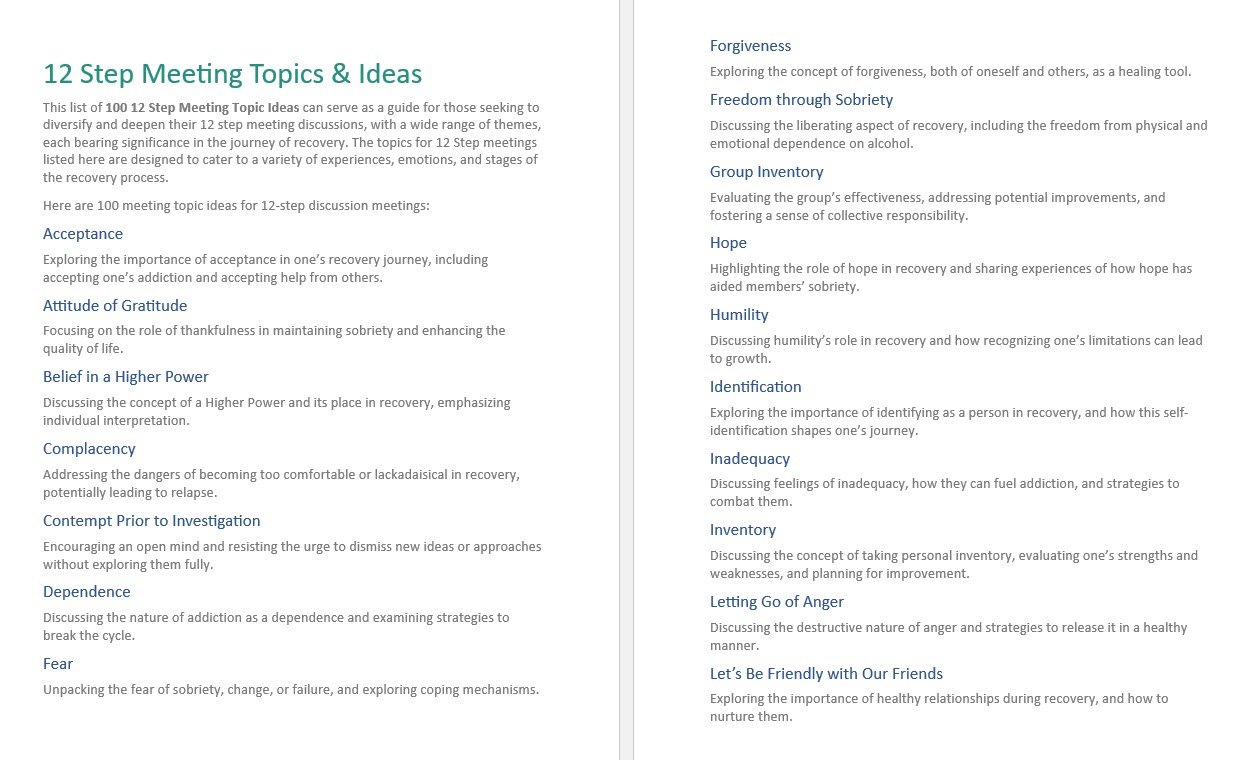
For more prompts that may be adapted for peer-support discussion, see our 12 Step Meeting Topics and Discussion Questions.
Frequently Asked Questions About Relapse Prevention Plans
What should be included in a relapse prevention plan?
A useful relapse prevention plan should identify personal warning signs and triggers, people you can contact, meetings or other support you can access, coping strategies you are willing to use and the daily practices that help support your recovery.
It should also include what you plan to do if you drink or use again. The purpose is to think through important decisions before you are in the middle of a difficult situation.
What are the three stages of relapse?
In Steven Melemis’ relapse-prevention model, the stages are emotional, mental and physical relapse.
Emotional relapse involves changes in emotions, behavior and self-care before someone is consciously considering use. Mental relapse involves increasing conflict about using. Physical relapse refers to the return to alcohol or drug use.
What are the 5 Ds of relapse prevention?
There is no universally accepted set of five Ds.
One version commonly taught as the Four Ds of relapse prevention uses Delay, Distract, De-stress and De-catastrophize. Some sources add another D, which is why several five-D versions can be found online.
Because the terminology varies, check the source of the particular version you are using rather than assuming there is one official set.
What are common relapse warning signs?
Warning signs differ from person to person. They can include increasing isolation, poor sleep or eating habits, neglecting self-care, missing meetings, becoming less honest with people in your support system, romanticizing past use or thinking more frequently about situations where you might drink or use.
A warning sign does not mean relapse is inevitable. It is a reason to look more closely at what is changing and decide whether you need additional support.
How many times do people relapse before staying sober?
There is no evidence-based number of relapses that a person must experience before achieving long-term recovery.
Some people do not return to use after entering recovery. Others experience one or more relapses. The National Institute on Drug Abuse explains that relapse may indicate that treatment should be resumed, modified or changed.
An “average number of attempts” is therefore not a very useful way to predict what recovery will look like for an individual person.
What are the 3 Rs of addiction recovery?
There is no single standardized “3 Rs” relapse-prevention framework used across addiction treatment, AA, NA and other recovery programs.
Different organizations use the phrase in different ways. If you encounter a set of “3 Rs,” look at how that particular source defines them rather than assuming the terminology is universal.
Can I use this worksheet with AA or NA?
Yes. The worksheet was created to be 12-step-friendly and includes practices familiar to people in AA, NA and other fellowships, such as sponsorship, meetings, HALT, inventory, prayer or meditation and service.
It is not official AA or NA literature and is not approved, endorsed or published by either fellowship. You can use the worksheet as written or edit the Word version to better fit your own recovery and fellowship practices.
Is this an official 12-step worksheet?
No. This is an independent educational resource created by 12Steppers.org. It is not conference-approved or otherwise approved, endorsed or published by AA, NA or another 12-step fellowship.
The term 12-step-friendly is used because the worksheet incorporates concepts and practices that may be familiar to people participating in 12-step recovery without presenting itself as official fellowship literature.
Can I edit the relapse prevention worksheet?
Yes. The Word version is intentionally editable so you can change questions, remove sections, add your own prompts or adapt the worksheet to better reflect your recovery approach.
If you are adapting the worksheet for a group, organization or fellowship setting, make sure your edited version does not imply that it is official literature or has been approved by an organization that did not create or approve it.
Sources and Additional Resources
- Steven M. Melemis. Relapse Prevention and the Five Rules of Recovery. Yale Journal of Biology and Medicine.
- National Institute on Drug Abuse. Treatment and Recovery. Drugs, Brains, and Behavior: The Science of Addiction.
- Substance Abuse and Mental Health Services Administration. Mental Health and Substance Use Helplines.
- Alcoholics Anonymous World Services. Alcoholics Anonymous, commonly known as the Big Book.
- ChooseHelp. The Four Ds: A Simple Relapse Prevention Strategy.
This article and accompanying worksheet are independent educational resources from 12Steppers.org. They are not medical or mental health advice and are not official, approved or endorsed literature of Alcoholics Anonymous, Narcotics Anonymous or any other 12-step fellowship.
Related Articles

The 12 Step Program “Higher Power”: What is it and how do you choose one?
12 Steppers
October 23, 2023
Read More »


