
Home » 12 Step Programs » 12-Step Worksheet with Questions – A Guide to Working the 12 Steps » Step 4 Worksheet with Questions – A Free Guide to Working the 4th Step » Step 4 Harms Done to Others Worksheet
Step 4 Harms Done to Others Worksheet
A free harms list for AA, NA, Al-Anon and every other 12 step program that prepares you for Step 8.
Download the Free Step 4 Harms List Worksheet
Updated: November 2026
Your resentment and sex conduct inventories will already name many of the people you’ve hurt. A harms list catches everyone else: the people you lied to, borrowed from, neglected or simply weren’t there for.
This free 10-page worksheet includes prompt lists for who you may have harmed and how, a five-column harms chart, two worked examples and a page that helps you get ready for Step 8.
Prefer one download for the whole step? The free Step 4 worksheet includes this harms list alongside every other Step 4 inventory.
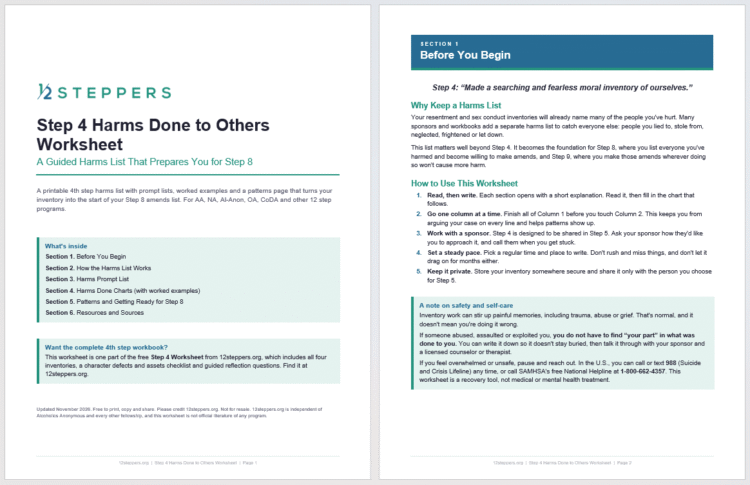
Step 4: "Made a searching and fearless moral inventory of ourselves."
Why Keep a Separate Harms List?
The Big Book’s Step 4 charts focus on resentments, fears and sex conduct. Many sponsors and workbooks add a separate harms list so nobody gets missed, especially people you never resented but still hurt.
This list matters well beyond Step 4. Step 8 reads: “Made a list of all persons we had harmed, and became willing to make amends to them all.” Your harms list becomes the starting point for that list, which makes Step 8 far less daunting when you get there.
How to Fill Out the Harms Chart
| Column | What to write |
| 1. Who did I harm? | The person, group or organization. |
| 2. What did I do? | The action, described briefly and specifically. |
| 3. Why did I do it? | What you were after: money, approval, escape, control or protection. |
| 4. My part | Check selfish, dishonest, self-seeking, frightened or inconsiderate. |
| 5. Instead | What a better choice would have looked like. |
As with every Step 4 chart, finish Column 1 before moving on. Getting all the names down first keeps you from stalling on the hardest entry.
Harms List Examples
| Who did I harm? | What did I do? | Why did I do it? | My part | Instead |
| My kids | Missed their school play and broke promises to show up. Came home after using. | I wanted to keep using without anyone stopping me. Protecting my image as a “good parent.” | Selfish, dishonest, inconsiderate | Kept my word or been honest about why I couldn’t. Asked for help sooner. |
| Former employer | Padded expense reports and took supplies home. | Money for using. Felt like I was owed it. | Selfish, dishonest, self-seeking | Lived within my means and been honest about needing help. |
Who and What to Include
Start with the people, then think about the kinds of harm. Some names will show up more than once, and that’s okay.
- Family: parents, siblings, children, a spouse or partner, former partners and extended family.
- Work and money: employers, coworkers, employees, businesses, landlords and creditors.
- Community: friends, neighbors, strangers, people in the program, organizations and yourself.
Harm comes in more forms than people expect. Words count, like lies, insults, gossip and threats. So do actions, like stealing, cheating or driving impaired. Neglect counts too: not showing up, skipping responsibilities and leaving others to clean up your mess.
Don’t Make Amends Yet
It’s natural to want to fix things the moment you see the damage on paper. Hold off. Writing a name here is not a commitment to contact that person, at least not yet.
Step 9 reads: “Made direct amends to such people wherever possible, except when to do so would injure them or others.” That exception matters. Some amends could reopen wounds or put someone at risk, which is why they’re worked through carefully with a trusted sponsor later on.
If this list stirs up guilt or shame that feels unbearable, talk to someone today. You can call or text the 988 Suicide and Crisis Lifeline any time, or call SAMHSA’s National Helpline at 1-800-662-4357.
From Your Harms List to Step 8
First, you’ll share your whole inventory, including this list, in Step 5. Our guide to the 5th step and admitting our wrongs explains what that looks like.
When you reach Step 8, this list becomes your starting point. Read our article on the 8th step list of people harmed, then use the Step 8 worksheet with questions. After that, our guide to the 9th step and the 9th step promises covers making amends.
Haven’t finished the rest of Step 4? Pick up the resentment inventory, fear inventory or sex conduct inventory worksheets.
Harms List FAQs
Is the harms list part of the Big Book’s Step 4?
Not as a separate chart. The Big Book’s Step 4 instructions cover resentments, fears and sex conduct. Many sponsors and workbooks add a harms list so everyone you’ve hurt gets written down before Step 8.
Is this the same as my Step 8 list?
It’s the starting point. In Step 8, you review the list with your sponsor, add anyone missing and work on becoming willing to make amends to them all.
Should I put myself on the harms list?
Many people do. Addiction often does real harm to the person caught in it. Listing yourself can be part of an honest inventory, as long as it doesn’t become self-punishment.
What if I can’t remember everyone I’ve harmed?
Write down who you can remember. More names often come back as you work the other steps. You can always add to the list later, including in Step 8.
Can I use this harms list in NA or Al-Anon?
Yes. It works in any 12 step fellowship, including NA and Al-Anon. Pair it with your own fellowship’s literature.
Additional Resources
- Alcoholics Anonymous World Services. “The Twelve Steps.” Alcoholics Anonymous.
- Alcoholics Anonymous World Services. “Chapter 5: How It Works.” Alcoholics Anonymous, Fourth Edition.
- Substance Abuse and Mental Health Services Administration. “SAMHSA’s National Helpline.” SAMHSA.
- 988 Suicide and Crisis Lifeline. “988 Lifeline.” 988 Suicide and Crisis Lifeline.